
Bean Juvenile Release Privacy
The Richard L. Bean Juvenile Service Center, also identified in the facility map as the Knox County Juvenile Detention Center, serves juvenile detention rather than adult county-jail custody. Juvenile release decisions and records carry confidentiality protections. They are not part of the KCSO adult Inmate Population page, the KCSO 24 Hours In Custody product, or an adult released-person archive.
This boundary is not a technical gap to work around. It is the governing access path. A missing adult-jail result cannot show whether a young person was detained, released to a guardian, moved to another juvenile placement, or subject to a court order. The correct source is the juvenile court or the authorized agency responsible for the case, and disclosure depends on the requester's legal role and applicable restrictions.
Bean Juvenile Court Contact
The researched facility address is 3321 Division Street in Knoxville. The adjacent Knox County Juvenile Court is at 3323 Division Street and uses 865-215-6400. The number is provided as the court contact context, not as a promise that staff will release confidential custody details over the phone.
Richard L. Bean Juvenile Service Center3321 Division Street
Knoxville, TN 37919 Knox County Juvenile Court
3323 Division Street
Knoxville, TN 37919
865-215-6400
The official Knox County Juvenile Court page is the subject-matched source for current court contact and service information.
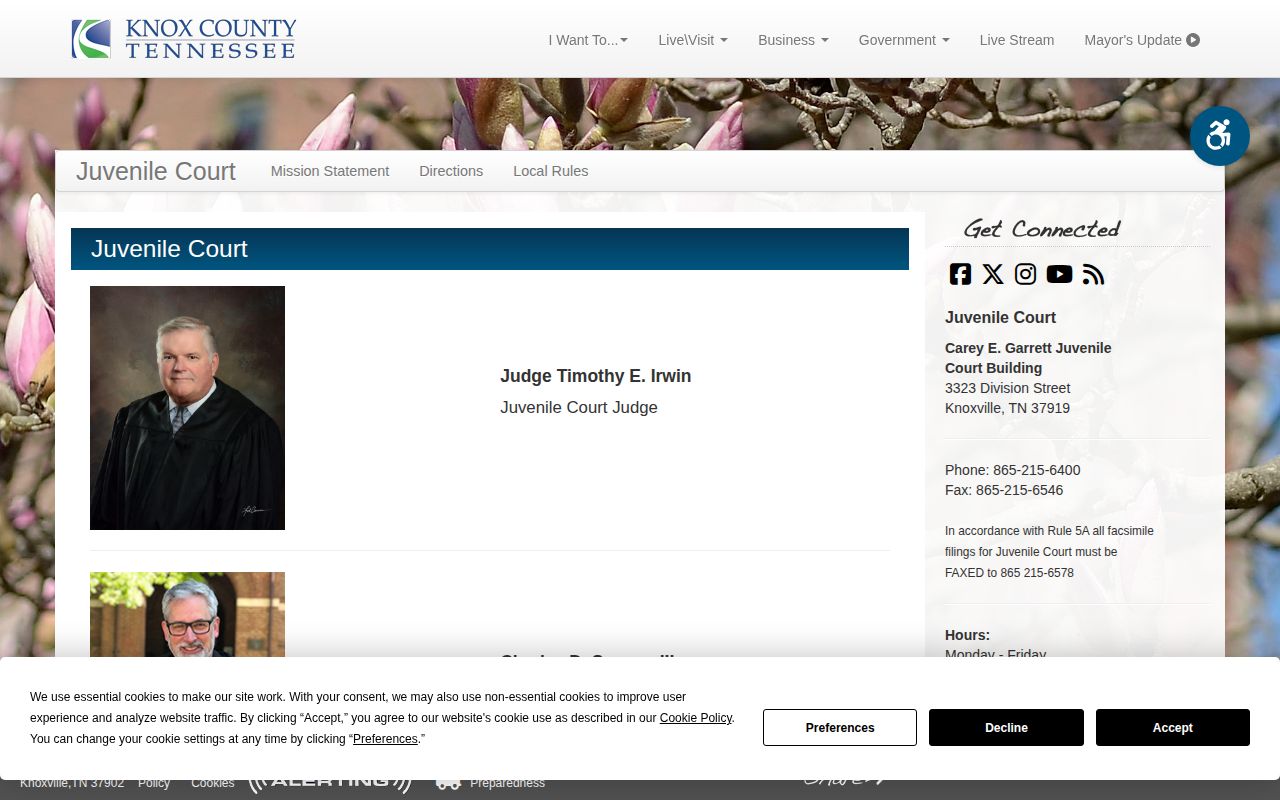
The court page directs users to the responsible local institution. It should be used for authorized routing, not for a public name search.
Bean Juvenile Record Roles
The nature of the requester's role can determine what the office may discuss. A parent or legal guardian may need to confirm identity and guardianship. Counsel may use court procedures and case credentials. An agency worker may follow interagency rules. A member of the general public has no automatic route to a named juvenile's detention or release information.
| Requester context | Appropriate first step | Likely limit |
|---|---|---|
| Parent or guardian | Call Juvenile Court and verify legal relationship | Office sets identity and access requirements |
| Attorney | Use the case and court process | Access follows representation and court rules |
| Authorized agency worker | Use the approved agency channel | Disclosure stays within official duties |
| General public | Request general, non-case-specific information | Named juvenile status remains confidential |
These categories describe routing, not guaranteed disclosure. The office may require written authorization, identification, an order, or another basis. Sensitive material can include identity, allegations, placement, medical or educational details, family information, safety planning, and the terms of release. The absence of a public answer is not evidence for any custody conclusion.
Bean Records Are Not Adult
The KCSO adult population tool serves adult county custody. TDOC's Felony Offender Information Lookup serves current or former state felony custody and supervision. BOP serves sentenced federal prisoners, and ICE states that its locator does not list minors. None of these systems should be repurposed as a Richard L. Bean release search.
- Juvenile detention
- A secure youth-custody setting governed by juvenile authorities and court process.
- Authorized requester
- A person whose legal role permits access under the applicable rule or order.
- Placement
- The setting ordered or approved for a young person; it is not always a community release.
- Release order
- A court or agency direction whose availability depends on juvenile confidentiality rules.
Adult status terms can also mislead here. An adult roster's due-out entry, a TDOC Release Eligibility Date, parole, probation, and an adult VINE event belong to other systems. Do not map those labels onto a juvenile case without an official juvenile source using them. The court and responsible youth agency define the event.
Including this facility in the Knox map serves one purpose: it keeps readers from assuming that all local custody appears in a public adult list. It does not create a public juvenile lookup.
Request Bean Juvenile Records
A records request must respect juvenile confidentiality from the start. Ask the court or agency which custodian holds the specific item and whether the requester is eligible to receive it. Identify an existing order, notice, or case record rather than demanding a new narrative. Send identity papers or authority documents only through a channel the office confirms as appropriate.
Tennessee's general public-record rules do not erase specific confidentiality laws. Juvenile, sealed, medical, victim, security, and personal information may be withheld or redacted. A custodian can explain the applicable route or legal basis without confirming a named youth's status to the public. When some part is lawfully available, the office may separate it from protected material.
| Request element | Why it matters |
|---|---|
| Exact court or agency | Directs the request to the record's creator. |
| Case number if authorized | Reduces mistaken identity and narrows the search. |
| Requester's legal role | Helps the office assess access authority. |
| Specific existing record | Defines what is sought without asking for a new compilation. |
| Secure contact information | Allows the office to give process or verification instructions. |
Do not send a juvenile's sensitive details through an unrelated web form. The search boxes on a general records site are not a juvenile-court filing channel. Follow the court's current directions for any submission, and keep copies of requests, authorization, and responses.
Tennessee Juvenile Facility Standards
The Tennessee Department of Children's Services publishes juvenile-justice material on the Prison Rape Elimination Act and youth-facility standards. That statewide material offers institutional context. It does not convert the state page into a locator for a young person held in Knox County and does not authorize public access to a juvenile release record.
The official Tennessee DCS juvenile PREA page is the successful manifest source matched to this facility topic.
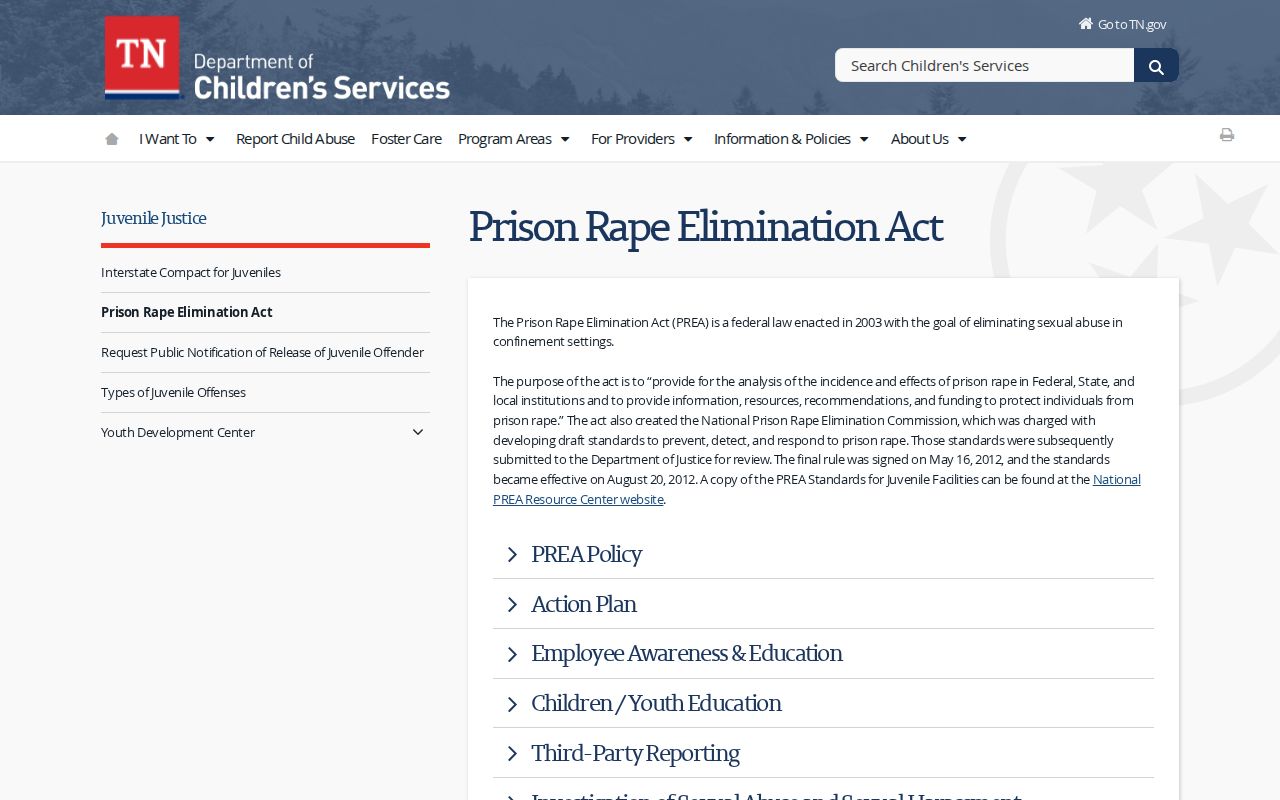
The state page explains standards and reporting context, while Knox County Juvenile Court remains the local route for an authorized case or release question.
General facility information may be public even when an individual's status is not. Policies, office contacts, and court procedures can help an authorized person reach the correct custodian. They should not be combined to infer a youth's presence or release.
Note: Statewide juvenile program pages provide policy context, not a Knox County juvenile custody database.
Bean Juvenile Release Accuracy
Accuracy begins by refusing the adult-search shortcut. Similar names, family reports, social posts, court-calendar entries, or the absence of an adult roster result do not confirm a juvenile's identity or status. The authorized record should name the responsible court or agency and the event it records. Access dates also matter because placement and court orders can change.
If an authorized person believes a record is wrong, the correction request belongs with the office that created it. Provide the case number through the approved channel, identify the exact field or order, and attach the source document the office permits. Correction, sealing, and confidentiality are different concepts and follow different procedures.
The narrow conclusion is the safe one. Juvenile Court or the responsible agency can guide an authorized requester, while the public adult systems cannot confirm release from Richard L. Bean Juvenile Service Center. This preserves both record accuracy and the confidentiality that governs Knox County juvenile matters. Any status statement should come from the authorized source and stay within the access granted for that case.