
Knox County 72-Hour Release Check
KCSO does not publish an official 72-hour release list or other three-day jail product in the source set checked on August 1, 2026. There is no Knox URL, published retention promise, release update schedule, or sheriff-app substitute for that window. The proper response is a date-range record inquiry, not a link to an unrelated custody page.
A three-day view would be useful because one-day checks can miss an event that falls before the user starts looking. Yet widening the period does not turn roster disappearance into proof. A person may have been released to the community, transferred, rebooked, or removed through a data correction. Positive confirmation still requires an agency event, release record, or aligned source documents.
Knox 72-Hour Roster Data Quirk
The closest sheriff product has a one-day label, not a three-day window. KCSO navigation says “24 Hour Arrest,” and the page itself says “24 Hours In Custody.” It shows custody and case details, including photos and some scheduled due-out entries. It has no completed-release field. Repeating that product across three dates would not create a reliable Knox County 72-hour release list.
Roster subtraction is also unsafe. Comparing a Monday list with a Friday list could mark transfers, corrected records, or new booking structures as releases. It could miss a person whose entry changed twice within the period. KCSO does not publish a multi-day archive or claim that its current display preserves every status change.
The KCSO corrections FAQ supports the checked source context but does not announce a 72-hour release feed. State the absence as dated because the sheriff can change its systems later.
Note: A future DUE OUT TIME remains scheduled even when it falls inside the chosen three-day range; confirm the event after processing.
Check Knox County Three-Day Releases
Build the inquiry around exact calendar dates and known people. The source chain should move from current county custody to event confirmation, written records, and destination. This avoids treating a court order or vanished roster entry as a completed community release.
- Define the start and end dates, including time of day if known. Note whether the period crosses a weekend or holiday.
- Check the KCSO current population for each known person. A current match addresses present custody, while absence remains only a clue.
- Search Tennessee SAVIN through VINELink and compare name, identifiers, event type, source agency, and timestamp.
- Call KCSO detention and ask whether the person is still held. If not, ask whether public information distinguishes community release from transfer.
- Ask KCSO Records whether an existing release log or report is maintained for the exact range. Request that record rather than a newly made list.
- Check the court case and any destination system, such as TDOC FOIL, BOP, or ICE, when the evidence points outside KCSO.
The Knox County 24-hour release check is better suited to a same-day event. This three-day process is built around a defined range and a documentary request.
Knox 72-Hour Release Record Fields
There is no online Knox three-day field set to reproduce. Instead, ask for fields in an existing KCSO release log or the individual release and booking records. The agency need not create a new compilation. If no range report exists, request the named person’s source documents.
| Requested Field | Why It Matters | Public Feed Status |
|---|---|---|
| Full name and DOB | Matches the person and reduces false identity links | Identity appears on custody pages, not a release feed |
| IDN or booking number | Connects the event to one KCSO booking | No released archive located |
| Actual release date and time | Places completed custody end inside the requested window | Not observed online |
| Release or disposition code | Describes the agency’s recorded outcome | Not observed online |
| Releasing facility | Identifies Roger D. Wilson, Knox County Jail, or another unit | Request the maintained field |
| Destination or transfer agency | Separates community release from continuing custody | Request if kept and public |
Charges, bond, and court events explain context but are not substitutes for these release fields. A bond order authorizes a route. KCSO must still clear other cases and holds before a physical exit. Likewise, an agency transfer is a release from KCSO custody without release into the community.
Knox Weekend Release Verification
A 72-hour period often crosses Saturday and Sunday, but the Knox research found no official weekend-release rule, family waiting area, fixed release hour, or standard Friday adjustment. Do not invent one. Record the order time, scheduled due-out field, VINELink event, jail confirmation time, and actual release entry as separate points.
A court disposition can occur before the jail completes every check. The downtown Knox County Jail’s proximity to the courts can make a same-day order seem final, but another case, detainer, paperwork issue, transfer, or transportation step may prevent community exit. For Roger D. Wilson, use the same source sequence. The court says what legal action occurred; KCSO confirms when physical county custody ended.
Records-office public incident-report hours are Monday through Thursday, 8:00 a.m. to 4:30 p.m., and Friday, 8:00 a.m. to 4:00 p.m., excluding holidays and weekends. Those are published incident-report access hours, not a jail-release schedule. A request sent after hours may wait for staff review, which is different from a delay in the underlying release event.
Knox Three-Day Release Log Requests
Contact KCSO Support Services/Records at 400 West Main Street, Knoxville, TN 37902, or call 865-215-2243. Ask first whether KCSO maintains an existing release log or report for the defined dates. If it does, request inspection or an electronic copy and list the fields sought. If it does not, narrow the request to identified people and bookings.
A focused request can ask for the booking sheet, release or commitment sheet, actual release date and time, release/disposition code, releasing facility, public transfer-destination field, and booking photograph if relevant. Supply the name, date of birth, IDN, and approximate custody dates. Request an estimate before chargeable work. Do not use the KCSO notarized arrest-record authorization form as if it were the general Tennessee Public Records Act form; the sheriff describes that form for a different arrest-record purpose.
Tennessee law addresses existing public records. An agency need not answer a question or build a report that it does not keep. If prompt production is impracticable, the seven-business-day framework calls for production, written denial with a basis, or a written reasonable-time estimate. That point is not a promise of final delivery within seven days.
Note: Ask for inspection first when the record name is uncertain, then request only the pages or electronic fields needed for verification.
Knox Court Records Across Three Days
The Knox court record can fill the legal part of a multi-day timeline. Seek the judgment, dismissal or nolle order, bond order, sentence, jail-credit notation, time-served entry, probation order, revocation, or sentence-completion entry. A daily docket shows scheduled events and is not a complete historical disposition search.
Online access is fragmented. The General Sessions Criminal and Fourth Circuit storefront covers cases filed since November 2017, became prepaid or subscription-only on July 1, 2026, excludes sealed matters, and does not promise that every filing is scanned. It does not claim full Criminal Court felony coverage. Paper inspection and direct Clerk contact remain important.
The Knox court portal terms document these scope limits. The captured official page appears below.
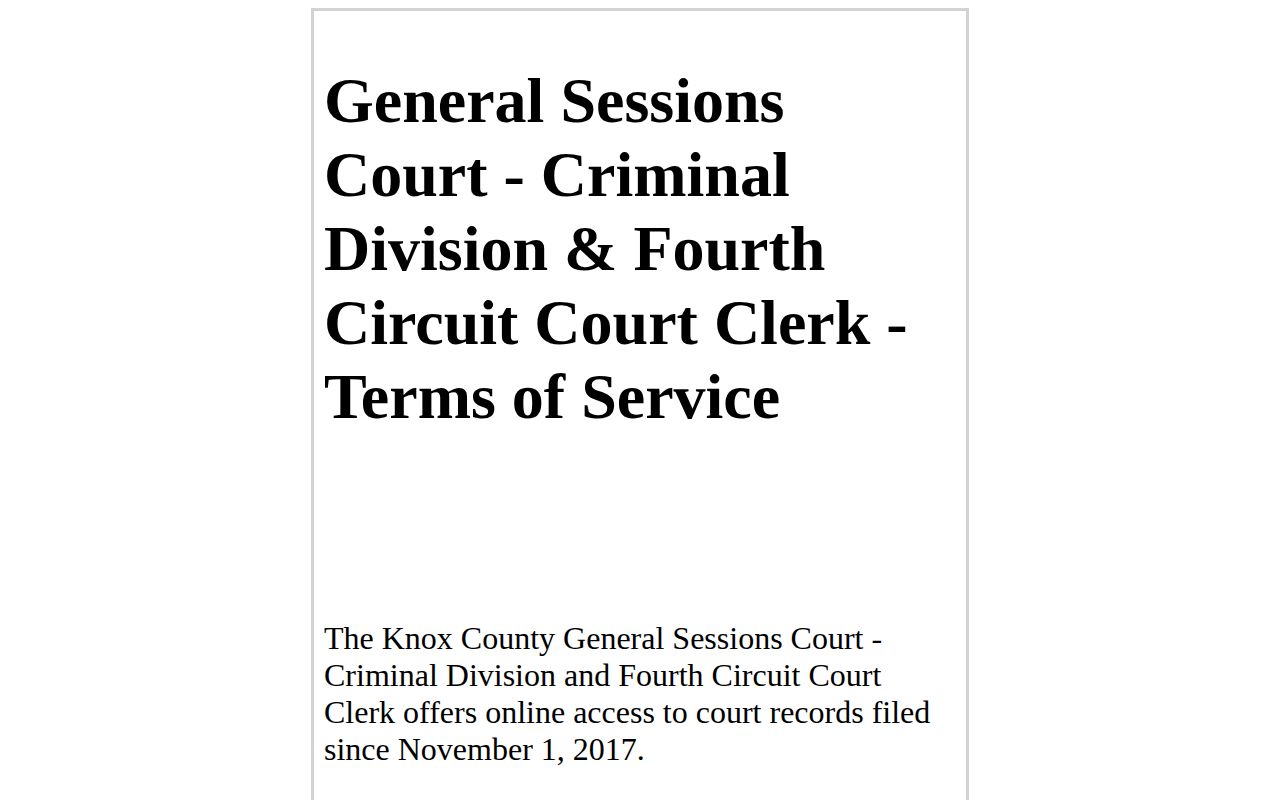
Those limits explain why a missing online document cannot prove that no release order or disposition exists.
Knox Releases and Transfer Destinations
A three-day review must follow the person beyond KCSO when the record shows a handoff. FOIL covers a person received into TDOC felony custody or later placed on state supervision. An “Incarcerated” TDOC result after a KCSO disappearance supports county-to-state transfer, not community release. Parole or probation is community status under supervision, while inactive generally points toward no active state supervision.
BOP’s locator applies to sentenced federal prisoners. A future date is projected, while a past date with a released status addresses BOP custody only. USMS has no public release locator for federal pretrial detention, so use the federal court order, detention source, or a specific FOIA request. None of these sources is a substitute for a Knox jail record.
ICE’s Online Detainee Locator covers current detainees and people released from ICE custody during the prior 60 days. A KCSO handoff to ICE is transfer. The official ICE detention information below explains the separate federal immigration channel.
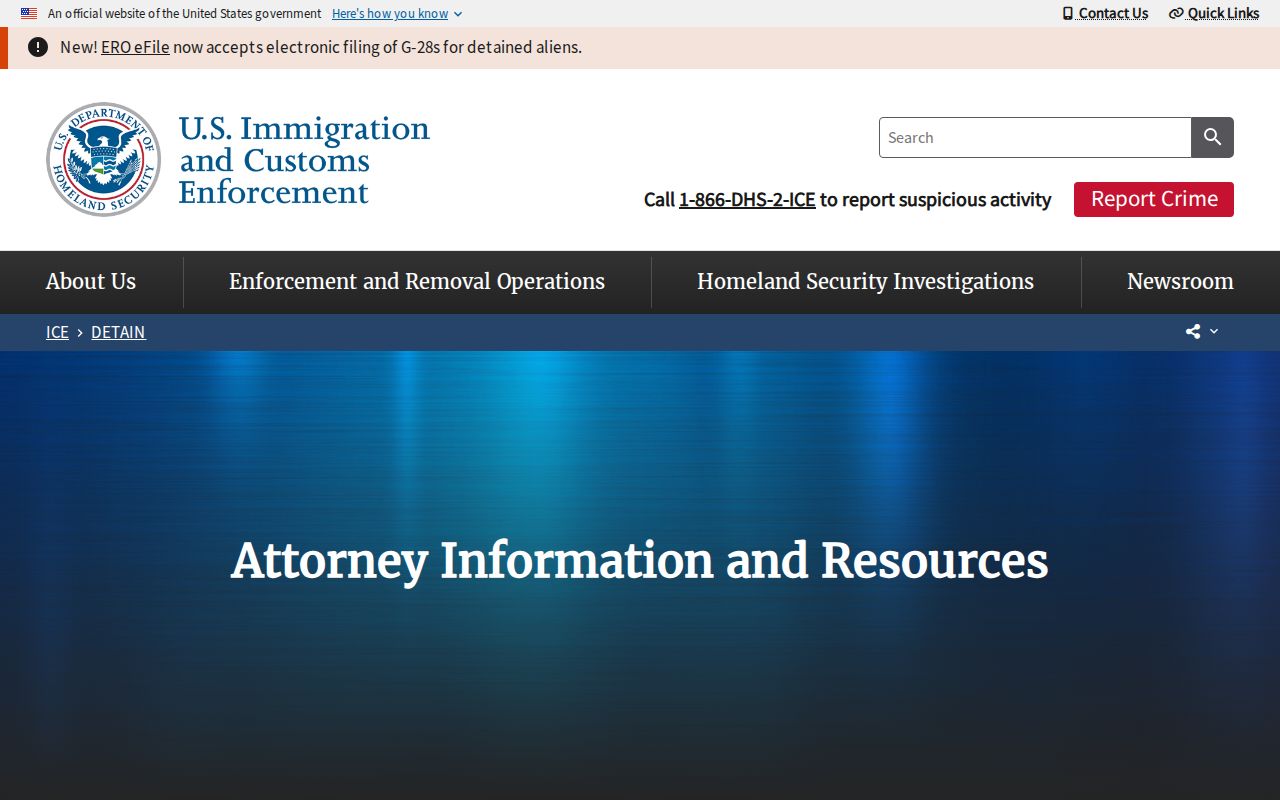
Use ICE only when the case facts support an immigration custody path, and keep the county and federal events labeled separately.
Reconcile Knox Three-Day Release Conflicts
Conflicting results are common when each source updates on its own schedule. If the court shows dismissal but KCSO still lists the person, call the facility because another case or hold may exist. If KCSO no longer lists the person and FOIL says incarcerated, verify identifiers and treat TDOC transfer as the likely path. If VINE reports release but another locator still shows custody, compare agency names and timestamps.
Use exact language. “KCSO’s release record states an actual release date” is stronger than “the name was gone.” “VINELink reported release from KCSO” identifies the event source. “Transferred to TDOC” avoids the false claim that the person entered the community. Preserve copies or access dates when a multi-day inquiry may need later review.
A historical 72-hour window is best reconstructed from source records. A current roster cannot be turned back into a reliable archive, and neither court authority nor a scheduled due-out time completes the physical-release timeline on its own. For one named person, use the broader Knox County released-inmate search and records path.